
Overview of Point Reyes Geology

By Terry Wright, Geology Department, Sonoma State University

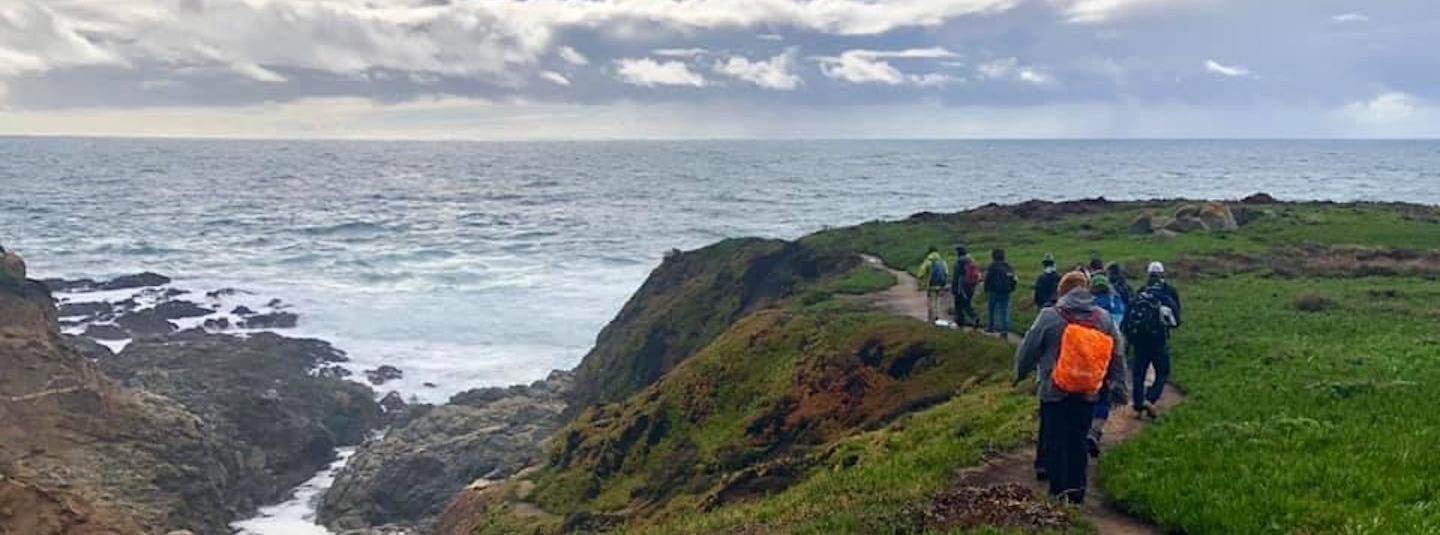
Point Reyes' geology is separated from that of mainland Marin County by the San Andreas Fault. Point Reyes is founded on ancient granites and gneisses; continental rocks formed far to the south and moved north at least 335 miles by the fault. To the east of the fault lies the Franciscan Complex; oceanic rocks mixed by faulting as ocean floor slid east under the edge of the continent. Both areas are covered by a thin mantle of more recent rocks formed in shallow seas, beaches, volcanos and rivers. Recent uplift and ongoing landslides, river and beach erosion has sculptured the scenery.

We can see a side view of these rocks in Figure 1 Point Reyes Geology. Different symbols and patterns show the relationships among rock units and ages

Point Reyes west of the San Andreas Fault

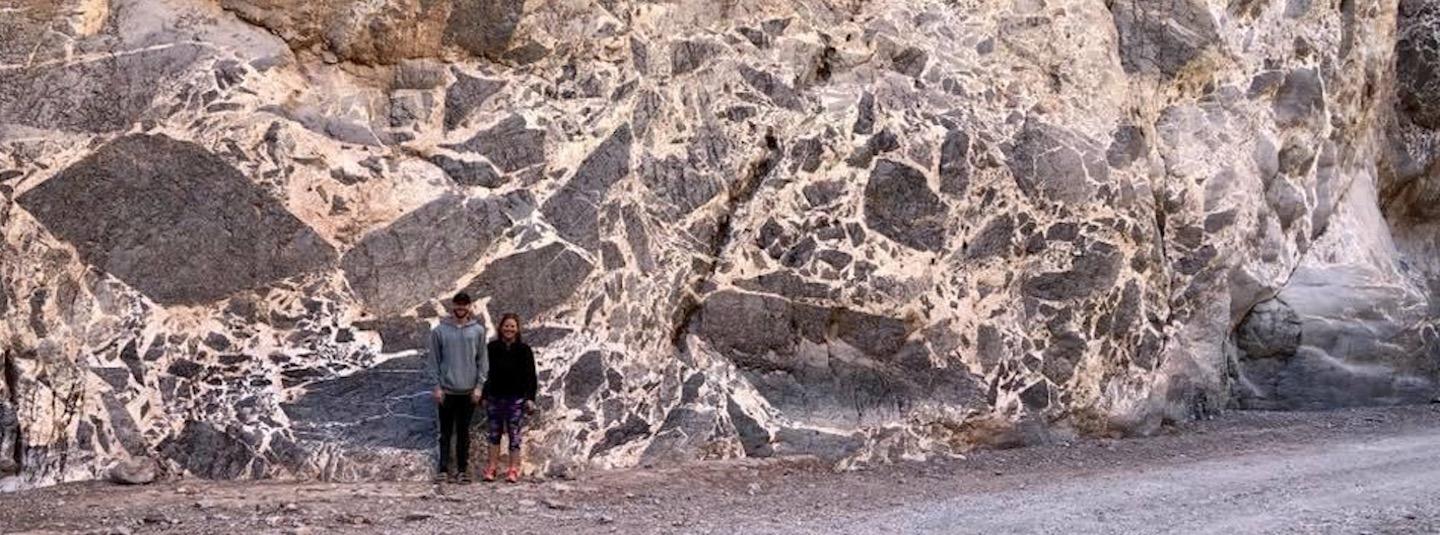
Bedrock west of the fault is the Igneous Plutonic rock Granite with variations. The salt and pepper texture and visible crystals of rocks exposed on the grade west of Tomales Bay, at McClure's Beach and around the parking lot at Point Reyes are typical of this unit. This intruded 100 million years ago as molten rock deep beneath the earths surface. It contains patches of metamorphic rock (gneiss, marble, etc) which are the remains of ancient layered rocks ripped off by the granite as it pushed its way toward the surface. We call these the Sur Series because similar rocks are exposed in Big Sur far to the south. We call this sequence "Salinia" because similar rocks form the Santa Cruz and northern Big Sur mountains near Salinas. Examples of these rocks are displayed along the Earthquake Trail in Bear Valley. The salt and pepper rock is Granodiorite, the white rock is marble and the streaked gray rock is gneiss.

A thick sequence of layered sedimentary rock ranging in age from 3 back to 50 million years old lies above the Granites. The Point Reyes Conglomerate (50 million years) lies on an erosion surface or unconformity above granite at the Point Reyes parking lot. It appears as pebbles and sand on the tops of low hills and in a cliff just beyond the Point Reyes Light Visitor Center. The granite was uplifted and eroded deeply, and the conglomerate laid down on top.

Graded beds with grain size changing from pebbles at the bottom to sand at top are evidence of deposition by turbidity currents in submarine canyons. This unique process is a cloud of sand and gravel that rushes down the continental slope to the deep ocean floor, depositing large grains first, and finer grains later. The current is commonly triggered by earthquakes. Also, unique purple pebbles with square gray crystals eroded from Sierran volcanos 140 million years ago. They match pebbles in conglomerates at Point Lobos on the Monterey Peninsula, and indicate 100 miles of movement on the San Gregario fault.

Another period of uplift and erosion wiped out most of the Point Reyes Conglomerate, and set the stage for a sandy beach deposit, the Laird Formation about 16 million years ago. The sheer bluffs at Kehoe Beach form from this layer of sand, which lies directly on the granite. The ocean subsided 15-11 million years ago and deep-water deposits of siltstone, mudstone, shale and chert formed the Monterey Formation. These rocks are light colored and layered 3-5" thick and are commonly folded. Exposed folds and faults at Kehoe Beach are in Laird and Monterey Formation layers. They commonly form an angular unconformity with overlying rocks, visible clearly at Limentour Beach to the south.

The next layers to form are found in the white cliffs around Drake's Bay. They reminded Drake of the white cliffs of Dover in England. Collectively these are called the Drake's Bay Formation, but have been recently subdivided into a lower sandstone (Santa Margarita Formation), a middle unit of olive gey to yellow gown siliceous mudstone (Santa Cruz Mudstone) and an upper massive gray mudstone and brown siltstone (Purisima Formation). These rocks formed in a subsiding basin along the San Andreas Fault between 6 and 3 million years ago.

Within the fault zone and at Bolinas we see outcrops of the Merced Formation another silty and sandy unit formed in a separate basin from the Drake's Bay Formation at the same time.

Older Alluvium is found in stream terraces and flat benches raised above sea level along Tomales Bay. Locally these are called the Millerton Formation of recent age (less than 100,000 years). They include marine and freshwater conglomerate, gravel, silts sands and mud. They formed at or near sea level in mudflats or freshwater lagoons and have been uplifted several hundred feet. The town of Point Reyes Station is built on a stream terrace. A formation of clay and mudstone called the Olema Creek Formation is found in the San Andreas Fault zone valley. Millerton Formation is sand and gravel formed in the same area along the east side of Tomales Bay.

Marine Terraces form flat shelves from Bolinas to Limantour Estero. These are shorelines that form as waves erode rock into a flat plane such as Duxbury Reef west of Bolinas Beach. They become lifted up 120-200 feet by pressures along the San Andreas Fault. Intermitant deposits of sand and gravel are preserved above the eroded bedrock.

Older Beach Deposits are layers of sand that sit above present beaches from McClures Beach to Point Reyes. At McClures beach they are exposed on the south bank of the canyon that the trail follows to the beach and on the ocean beach itself. Iron has cemented the sand and formed "liesegang banding" at angles to the layering because they are deposited by groundwater.

Younger Alluvium comprises the beach sand, dune sand, lagoon mud, stream gravels and coarse slopewash being deposited today.

East of the San Andreas Fault

Bedrock east of the San Andreas Fault is mixed up bunch of rocks called the Franciscan Complex (140-42 million years). Its parts formed on the ocean floor far from here and accumulated in an oceanic trench . These rocks then mixed together by faults as the ocean floor slid under the continent. Pillow lava (basalt volcanic rock) exposed down hill from Nicasio dam is a perfect example of these rocks. The California state rock, serpentine is also typical. Magnificent examples of these rocks are exposed to the north at Shell Beach on the Sonoma County coast south of Jenner.

An overlying sequence of layered rocks including volcanic rocks ranging in age from 10-2 million years is found unconformably overlying the Franciscan Complex.

Recent alluvium and deposits similar to Point Reyes occur to the east of the fault.

Geological History of Point Reyes west of San Andreas Fault

1. Sur Series metamorphic rocks formed by heat and pressure on sedimentary rocks formed on a continental shelf. ?350 million years.

2. Intrusion of granitic rock and metamorphism of the pre-existing rocks. (100 my)

3. Uplift and erosion of the land exposing the granitic rocks forming a nonconformity.

4. Submergence of the land and deposition of the Pt. Reyes Conglomerate (50 my)

5. Uplift and erosion of the Pt. Reyes Conglomerate and other preexisting rocks forming a second unconformity

6. Submergence and deposition of the Laird Formation (16 my)

7. Further deepening of the ocean and deposition of the Monterey Formation (15-11 my)

8. Deformation, uplift and erosion of the Monterey and earlier rocks to form angular unconformity

9. Submergence below the sea and deposition of Santa Margarita sands (6 my)

10. Further submergence and deposition of the Santa Cruz Mudstone (~5 my)

11. Deposition of Purisima Formation (~4 my)

12. A period of emergence, deformation and erosion of the Drakes Bay Fm and earlier rocks.

12. Ice age and modern depositional systems including older alluvium and terraces, older beaches, marine terraces, dunes, bay, modern beaches and alluvial deposits (2my-present)

Further references:

Virtual field trip website-Terry Wright

http://www.sonoma.edu/geology/wright

Jim Locke's College of Marin Website on Point Reyes Geology

http://citt.marin.cc.ca.us/ring/ptreyes/ptrey1.html

Galloway, A., 1977, Geology of the Point Reyes Peninsula, Marin County, California, Bulletin 202, California Div. of Mines and Geology, Sacramento, California. (Available at the Bear Valley Visitor Center)

Copyright 2000, Terry Wright

Return to virtual field trip page

TW 1/12/00